
Why That ‘For Sale by Owner’ Sign Hasn’t Worked: Land Selling Myths Debunked
“I thought my ‘For Sale by Owner’ sign would do the trick. A year later, the only thing that showed up were more tax bills and tall weeds. When I reached out to Friendly Land Buyers, they looked at my property online, explained the process in plain English, and gave me a cash offer in a couple of days. They handled the title questions, the back taxes, and the closing—while I stayed at home in another state. What felt like a nagging problem for years was finished in less than two weeks. I wish I had skipped the sign and called them first.” – Mark T., OK
For many landowners, putting up a “For Sale by Owner” sign feels like the most natural first step. It’s simple, it’s inexpensive, and it gives you a sense of control. You don’t have to involve an agent, you don’t have to pay commissions, and you get to handle everything on your own terms. On the surface, it sounds like a smart move.
But then time passes. Weeks turn into months. The sign fades a little in the sun. The grass grows taller. The phone stays quiet. Meanwhile, the property taxes continue arriving right on schedule, and what once felt like a proactive decision starts to feel like something you’re stuck with.
If that experience sounds familiar, you’re not alone. Many landowners begin their journey exactly this way, only to realize that selling land—especially vacant or rural land—works very differently than they expected. The gap between expectation and reality often comes down to a handful of common myths that sound reasonable at first but don’t hold up in practice.
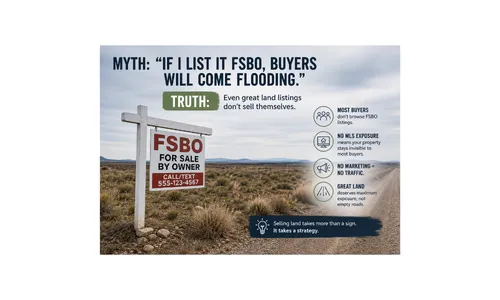
One of the biggest assumptions is that a sign alone is enough to attract the right buyer. That idea comes from how homes are typically sold. In a busy neighborhood, a sign can work because there’s consistent traffic and a built-in audience of people already looking to buy in that area. Land doesn’t benefit from that same exposure. A vacant parcel, especially one located outside of town or in a rural setting, might only be seen by a few passersby each week. Most of them aren’t actively searching for land, and even fewer are ready to make an offer.
Today’s land buyers usually start their search online. They’re comparing properties across counties and even across state lines. They’re looking at maps, access points, zoning, and potential uses before they ever think about visiting in person. A sign planted in the ground doesn’t reach those buyers. It speaks only to whoever happens to drive past, which is rarely enough to generate real interest.
Another common belief is that handling the sale yourself automatically means you’ll make more money. It sounds logical—no agent fees should mean more cash in your pocket. But what often gets overlooked is the cost of time. While you’re waiting for the right buyer, the property continues to cost you money. Taxes don’t pause. If the property is part of a homeowners association, dues may continue to accumulate. In some cases, owners even pay for basic upkeep just to keep the property from becoming overgrown or attracting complaints.
Over time, those holding costs add up. What seemed like savings at the beginning can quietly shrink as the months go by. There’s also the challenge of pricing. Land isn’t as straightforward as residential real estate. Two parcels that appear similar at a glance can have very different values depending on access, terrain, utilities, and local regulations. Without experience in land sales, it’s easy to set a price that’s either too high to attract serious buyers or too low to reflect the property’s actual potential.
Many owners turn to online estimates for guidance, hoping for a quick answer. While those tools can be helpful for homes, they often miss critical details when it comes to land. They don’t always account for whether there’s legal access, how the land can be used, or what improvements might be required before someone can build or develop it. Those missing details can make a significant difference in value and buyer interest.
There’s also a tendency to assume that the right buyer is local. It’s easy to picture a neighbor, a friend of a friend, or someone from the same town stepping forward with interest. While that does happen occasionally, it’s not the norm for vacant land. Many buyers are looking from a distance. They may live in a city and want a recreational property a few hours away, or they might be investors searching across multiple regions for opportunities that fit specific criteria.
Because of that, limiting your reach to local exposure can significantly reduce your chances of finding a serious buyer. The audience you need often isn’t driving by your property—they’re searching online, comparing options, and making decisions based on data rather than proximity.
Even when inquiries do come in, managing them can become more complicated than expected. Each conversation requires you to answer detailed questions about the property. Buyers want to know about access, utilities, zoning, boundaries, and any potential issues. If the land was inherited, you may also be dealing with title complications, probate, or multiple owners. Navigating those topics confidently can be challenging, especially if you’re learning as you go.
On top of that, not every inquiry leads to a legitimate opportunity. Some buyers lose interest, others try to negotiate aggressively, and a few may propose arrangements that feel uncertain or risky. Sorting through those conversations takes time and energy, and many owners eventually find themselves feeling overwhelmed or discouraged.
When the FSBO approach doesn’t produce results, the next step is often to explore companies that buy land directly. At that point, another misconception comes into play—the idea that all land buyers operate the same way. In reality, there can be a wide range of approaches, from individuals making occasional purchases to established companies with structured processes and experience handling complex situations.
Working with a professional land buyer can offer a different kind of experience. Instead of waiting and wondering, the process becomes more defined. The property is evaluated based on its actual characteristics, including access, location, and potential uses. An offer is made with those factors in mind, and the steps to closing are clearly explained.
For many sellers, the biggest difference is the shift from uncertainty to clarity. There’s no need to guess at pricing, no need to field endless inquiries, and no need to manage the process alone. Title issues, back taxes, and paperwork are handled as part of the transaction, reducing the burden on the owner.
This doesn’t mean that selling land is impossible on your own. It simply means that the process requires a different strategy than selling a home. Land has a smaller buyer pool, more variables, and fewer standardized expectations. Approaching it with the same assumptions can lead to frustration, delays, and ongoing costs.
The stories of sellers who find relief often follow a similar pattern. They start with optimism, try to manage the sale themselves, and gradually realize that the effort outweighs the benefits. When they choose a more direct path, the sense of relief comes not just from completing the sale, but from finally resolving something that has been lingering in the background of their lives.
Letting go of an unused property can feel like lifting a weight. The tax notices stop. The uncertainty disappears. The mental space it once occupied is suddenly free for something more meaningful. That outcome is often more valuable than holding out for a slightly higher price that may or may not materialize.
Need Help?
If your “For Sale by Owner” sign hasn’t delivered the results you hoped for, you’re not stuck—and you don’t have to keep guessing your way through the process. Whether you’re dealing with vacant land, inherited property, back taxes, or a parcel in another state, there are straightforward options available.
Friendly Land Buyers works with property owners who are ready for a simpler path.
Call us directly at 888-912-3242 for immediate assistance.
Text us at 888-912-3242 for a quick response.
Click the chat icon in the bottom right corner to start a conversation now.
From there, you can share a few details about your property and get a clear understanding of what comes next.
There’s no pressure to move forward, and no obligation to accept an offer. The goal is simply to give you real information so you can make the decision that’s right for you. For many landowners, that first step is the turning point—from feeling stuck to finally having a plan.
If you prefer online communication, visit FriendlyLandBuyers.com or use the chat feature on our website to connect with someone who understands the process.
Disclaimer: This guide provides general information and should not be considered legal or financial advice. Please consult with a qualified attorney and/or financial advisor for specific guidance on your situation.
