
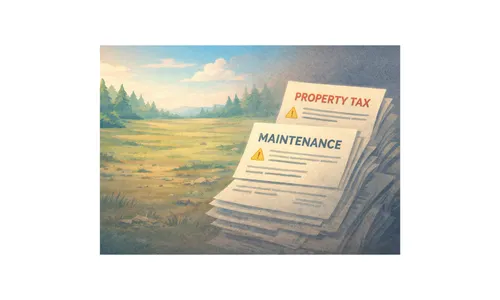
When Vacant Land Becomes a Bill: Knowing When It’s Time to Sell
“Friendly Land Buyers didn’t just buy my land, they gave me my weekends back. For years I kept saying I’d ‘figure something out’ with that empty parcel three states away, but all I really did was pay the tax bill and worry about it. Their team walked me through everything in plain language, answered every question without any pressure, and handled the title issues I’d been avoiding. A few weeks later, the sale was done, the taxes were off my plate, and I finally felt like I could stop thinking about a property I was never going to use.”
— David R., Arkansas County
For many Arkansas landowners, David’s story hits close to home.
The land once represented possibility. Maybe it was a few wooded acres outside town where you imagined building a cabin. Maybe it was a hunting spot you swore you’d use more often. Maybe it was inherited from a parent or grandparent who always talked about “keeping land in the family.” At the time, holding onto it felt responsible. It felt hopeful.
But years pass. Life changes. Jobs move. Health shifts. Children grow up and build their own lives. And what’s left behind is not a dream, but a recurring bill that shows up every year with quiet persistence.
This article is for Arkansas property owners who are starting to feel that shift. Not panic. Not urgency. Just a steady realization that vacant land may no longer fit your life the way it once did.
When “Paid-Off” Land Still Costs You
A common belief is that once land is paid off, it’s no longer a financial concern. No mortgage means no monthly obligation. That part is true. But ownership rarely becomes cost-free.
Arkansas counties assess property taxes on vacant land whether it is developed or not. Even modest tax bills add up over time. If you multiply your annual tax by several years, the cumulative amount can be significant, especially if the property provides no income or personal use in return.
Then there’s the possibility of late payments. One missed year might feel manageable. A second year adds penalties. If taxes remain unpaid long enough, the property can be certified to the state for tax sale. Even if you never reach that point, the letters and notices create a steady undercurrent of stress.
And taxes are just the visible part of the cost.
Vacant parcels can attract overgrowth, illegal dumping, boundary questions, or neighbor disputes. Managing those issues from a distance is inconvenient at best and exhausting at worst. If you live in another state, even checking on the property can require travel time and expense.
On paper, it’s still an asset. In daily life, it feels more like unfinished business.
The Emotional Weight of “Someday”
Many people hold onto Arkansas land because of a future plan that never quite materializes. It might sound like, “We’ll build there one day.” Or, “Maybe one of the kids will want it.” Or simply, “Land is always a good investment.”
The problem with “someday” is that it rarely comes with a timeline.
If you step back and ask yourself whether there is a specific, realistic plan attached to the property, the answer is often unclear. There may not be a builder lined up. There may not be savings earmarked for development. There may not even be regular visits to the land.
Instead, the ownership continues mostly out of habit.
For inherited land, the emotional layer can run even deeper. Selling might feel like letting go of family history. It might feel disloyal to a parent who once believed strongly in keeping the property. But intentions and circumstances are not the same thing. The fact that your father or grandmother once valued the land does not obligate you to carry it forever if it no longer serves your life.
Often, what keeps owners stuck is not financial logic but emotional hesitation.
How Vacant Land Quietly Becomes a Burden
Vacant land rarely becomes a burden overnight. It happens slowly.
The tax bill arrives. You pay it, maybe with a sigh. A year later, it arrives again. You think about listing the property, but you’re busy. Another year passes. You haven’t visited the land in five or ten years. If someone asks about it, your answer is vague.
You might have even tried to sell once. Perhaps you contacted a local real estate agent and discovered that rural land can be harder to move than a house in town. Maybe the property lacks utilities or easy access. Maybe the listing sat for months without serious interest.
Vacant land buyers tend to be specific. Some want hunting land. Some want build-ready lots with road frontage and utilities. If your parcel doesn’t check those boxes, it can sit on the market for a long time.
Eventually, it becomes easier to do nothing.
But doing nothing is still a decision. It means continuing to pay taxes. It means continuing to think about it every year. It means continuing to carry an obligation that may no longer fit your priorities.
A Simple Forward-Looking Check
Instead of looking backward at what you paid for the land, try looking forward.
Imagine keeping the property for several more years. Consider the property taxes, potential increases, and the possibility of penalties if you fall behind. Think about the mental space it occupies. Even if it’s small, it’s still there.
Now imagine selling.
What would the proceeds do for you today? Could they reduce debt? Strengthen your savings? Cover medical costs? Support a child or grandchild? Provide breathing room in retirement?
Sometimes the financial difference is not dramatic. Sometimes it is. But the emotional difference is often immediate.
Many sellers describe a sense of relief once the property is no longer theirs. The recurring tax notices stop. The worry about delinquency disappears. The open mental tab finally closes.
Why Selling Feels Complicated
Even when you decide it might be time to let go, the path forward can feel confusing.
Traditional real estate listings work well for houses in populated areas. Vacant rural land is different. It may require specialized marketing. It may take longer to attract interest. Buyers may back out after inspections or feasibility questions.
Owners often begin searching online for ways to sell land in Arkansas without months of waiting. They look for options that are legitimate but straightforward. They want clarity, not complexity.
At the same time, skepticism is understandable. Many landowners have received random letters or text messages offering to buy their property. Some feel questionable. Sorting serious buyers from opportunistic ones can be frustrating.
What most owners want is simple. They want a transparent process. They want clear communication. They want to understand how the numbers work. And they want to close without surprises.
A Familiar Arkansas Scenario
Consider someone living outside Arkansas who inherited a rural parcel decades ago. She has a full life where she lives now. A mortgage. Family obligations. Medical expenses. Retirement planning.
The Arkansas property sits untouched.
Every year, the tax notice arrives. Some years she pays immediately. Other years she delays. A late payment adds stress. She worries about what could happen if she falls too far behind. Traveling to inspect the property would mean time off work and additional cost.
She thinks about calling an agent but hesitates. She’s unsure how long it would take or whether it’s worth the effort.
Eventually, she contacts a professional land buyer who focuses specifically on Arkansas parcels. The conversation is straightforward. The paperwork is handled clearly. The closing process is explained step by step.
When the sale is complete, the strongest emotion is not excitement over a windfall. It is relief. Relief from recurring responsibility. Relief from uncertainty. Relief from something that quietly weighed on her for years.
That emotional shift is often more valuable than owners expect.
Letting Go Can Be a Financial Reset
Selling land is not about admitting failure. It is about recognizing when circumstances have changed.
What made sense ten or twenty years ago may not make sense now. Your goals may be different. Your financial priorities may be clearer. Your energy may be better spent elsewhere.
Vacant land can be a powerful asset when it aligns with your life. When it does not, it becomes a recurring bill disguised as an investment.
Turning that land into usable cash can create flexibility. It can simplify your finances. It can remove an obligation that no longer serves you.
And sometimes, simplicity is worth more than potential appreciation that may or may not materialize in the future.
Working with a Specialized Arkansas Land Buyer
If you are considering selling, working with a buyer who understands Arkansas land specifically can make the process smoother.
Specialized land buyers are familiar with rural parcels, inherited properties, and situations involving back taxes. They often purchase land as-is, without requiring improvements, cleaning, or marketing preparation. They coordinate title work and closing details so you are not navigating unfamiliar paperwork alone.
The goal is not pressure. It is clarity.
You deserve to understand your options fully before making any decision. Selling is not mandatory. It is simply one path available if keeping the property no longer fits your life.
Need Help?
If you are feeling stuck with unwanted Arkansas land, you do not have to figure it out by yourself.
Friendly Land Buyers works with Arkansas property owners who are dealing with inherited land, back taxes, long-distance ownership, or simply a parcel they no longer want to manage. Our team explains the process clearly, answers questions without pressure, and helps you understand what selling as-is might look like in your specific situation.
Call us directly at 888-912-3242 for immediate assistance.
Text us at 888-912-3242 for a quick response.
Click the chat icon in the bottom right corner to start a conversation now.
We are here to provide straightforward information so you can make the decision that feels right for you.
Disclaimer: This guide provides general information and should not be considered legal or financial advice. Please consult with a qualified attorney or financial advisor for guidance specific to your situation.
