
I Didn’t Even Live There’: How One Heir Turned Out‑of‑State Land into Savings
“I kept telling my sister, ‘I didn’t even live there when Grandpa bought that land, and I’m sure not moving there now.’ For three years I paid taxes on a property I’d only seen on Google Maps. I felt stuck between honoring his memory and watching my savings leak away little by little. Friendly Land Buyers was the first group that actually listened instead of pushing me to fix up or list the land. They walked me through everything over the phone, handled the paperwork in his state and mine, and wired the money straight into my savings. Letting that land go didn’t feel like letting Grandpa go—it felt like finally doing something wise with the gift he left me.” – Amanda Collins
Amanda’s story is far from rare. Across the country, many heirs find themselves responsible for land they never asked for, never visited, and never planned to manage. What starts as an unexpected inheritance often becomes a long-term obligation—one that quietly drains money, attention, and peace of mind.
For Amanda, what made the difference wasn’t just selling the land. It was finally understanding that keeping it out of guilt wasn’t the same as honoring her grandfather.
The Surprise of Inheriting Land You’ll Never Use
When Amanda first learned she had inherited a parcel of vacant land in another state, her reaction was a mix of confusion and hesitation. There was no house, no rental income, and no immediate plan attached to it. It was simply a piece of ground sitting hundreds of miles away from her daily life.
At first, she treated it like a meaningful keepsake. Something her grandfather had worked hard to acquire. Something she would “figure out later.”
But “later” arrived in the form of a property tax bill.
Then another the following year.
And another after that.
Each envelope served as a reminder that ownership doesn’t pause just because life is busy or the property is far away. Taxes kept coming, even though Amanda had no practical way to visit, maintain, or use the land. She began to realize that distance doesn’t reduce responsibility—it often makes it more complicated.
Like many heirs, she found herself searching online for answers, trying to understand what options existed. The results were overwhelming. Real estate agents, listing platforms, and land investors all promised solutions, but few explained what to do when you simply wanted out without turning it into a long, drawn-out process.
The more she looked, the more one truth stood out: doing nothing was still a decision, and it was costing her.
The Hidden Costs Behind “Free” Land
People often assume inherited land is a financial gift. In reality, Amanda discovered that ownership comes with ongoing obligations that don’t pause for sentiment.
Property taxes were only the most visible cost. There was also the mental weight of managing something she didn’t fully understand. Questions about boundaries, access, zoning, and future liability lingered in the background. Even without active use, the land required attention.
And because the property was vacant, it produced no offsetting income. No tenants, no development, no return on what she was paying each year.
Over time, Amanda began to mentally tally what the land was costing her. It wasn’t just the yearly tax bill. It was the cumulative effect of years of payments for something that didn’t fit into her life in any meaningful way.
That realization shifted her perspective. The question was no longer whether the land had sentimental value. It became whether holding onto it made sense for her current reality.
When Guilt Becomes the Heaviest Cost
For Amanda, the hardest part wasn’t financial—it was emotional.
Letting go of inherited property can feel like letting go of a person. She worried that selling the land meant erasing a piece of her grandfather’s legacy. That concern kept her stuck longer than the tax bills did.
But after talking with family, she began to see the situation differently. Her grandfather had been practical in life. He valued usefulness over burden. He likely never intended for inherited property to become a source of stress or financial strain.
That perspective changed everything. Instead of viewing the land as something she had to preserve at all costs, she began to see it as something that could either serve her life or quietly complicate it.
Many heirs reach this same crossroads. They want to do the “right” thing, but they’re unsure what that actually means when ownership becomes disconnected from real use.
Once Amanda gave herself permission to explore selling without guilt, the decision became clearer.
Turning Out-of-State Land into Cash Without the Stress
Amanda knew she didn’t want a traditional real estate experience. The idea of listing a remote vacant lot, coordinating with agents, and waiting months for a buyer felt exhausting—especially from another state.
Instead, she explored companies that specialize in buying land directly. These buyers typically focus on properties that are difficult to sell through conventional channels, including inherited parcels, vacant lots, and out-of-state ownership situations.
What stood out to Amanda was simplicity. Instead of preparing the land or coordinating showings, she only needed to provide basic information. The buyer reviewed the property, handled research on taxes and title history, and came back with a straightforward cash offer.
There were no repairs required, no marketing process, and no uncertainty about whether a buyer would eventually appear.
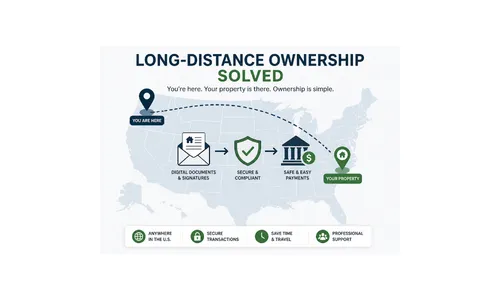
Once she accepted the offer, the process moved through a title company. They handled documentation, coordinated across state lines, and ensured everything was legally recorded. Amanda signed paperwork remotely and received her funds by wire transfer.
For someone who had never even stood on the property, the ability to complete everything without travel or stress made the decision feel practical rather than emotional.
Why Many Heirs Choose a Direct Land Buyer
Not every property fits neatly into a traditional real estate model. Vacant, inherited, or rural land often sits in a category where buyers are limited and timelines are unpredictable.
That’s why many heirs turn to direct land buyers instead of listing publicly.
These buyers are familiar with common complications such as outdated deeds, unpaid taxes, unclear boundaries, or properties that have been untouched for years. Instead of expecting the seller to resolve everything first, they typically factor those challenges into the offer.
For owners like Amanda, that means fewer moving parts and less uncertainty. There’s no need to learn a new market, hire multiple professionals, or coordinate long-distance logistics. The focus shifts from preparing the property to simply deciding whether the offer makes sense.
What Amanda Did After the Sale
When the transaction closed, Amanda expected to feel like she had lost something. Instead, she felt relieved.
The money from the sale didn’t disappear into abstract expenses. It went directly toward strengthening her financial stability. She paid down existing debt that had been weighing on her monthly budget. She added to her emergency savings, giving herself more breathing room for unexpected costs. She even set aside a portion toward future long-term goals that actually aligned with her current life.
More importantly, she stopped receiving tax bills for land she never used.
What once felt like a passive inheritance had become an active drain. Turning it into cash allowed her to redirect that value into something useful in the present.
The emotional shift was just as significant. She still remembered her grandfather fondly, but she no longer associated his gift with stress or obligation. Instead, she saw it as something she had responsibly resolved.
If You’re Holding Land You Don’t Use or Visit
If you’ve inherited land in another state or own property you rarely think about until a tax bill arrives, Amanda’s experience may feel familiar.
It’s common to delay decisions because the situation feels complicated or emotionally loaded. Many owners quietly hope it will resolve itself over time. But land doesn’t resolve on its own—it continues to require attention, even from a distance.
The good news is that you don’t need to figure everything out before taking the first step. Understanding your options is often enough to move forward with clarity.
For many people, the most helpful starting point is simply learning what the property is realistically worth today and what selling would involve. From there, the decision becomes less overwhelming and more grounded in facts rather than uncertainty.
You’re not obligated to keep land just because it was inherited. You’re allowed to evaluate whether it still fits your life.
Need Help?
If you’re dealing with inherited land, out-of-state property, or a vacant parcel you no longer want to manage, you don’t have to navigate it alone. Friendly Land Buyers can help you understand your options and determine whether selling makes sense for your situation.
Call us directly at 888-912-3242 for immediate assistance.
Text us at 888-912-3242 for a quick response.
Click the chat icon in the bottom right corner to start a conversation now.
Our land specialists work with inherited and unwanted land across different states and can walk you through the process without pressure or obligation. Whether you decide to sell or simply want clarity, the goal is to help you make a decision that fits your life today.
Disclaimer: This guide provides general information and should not be considered legal or financial advice. Please consult with a qualified attorney and/or financial advisor for specific guidance on your situation.
