
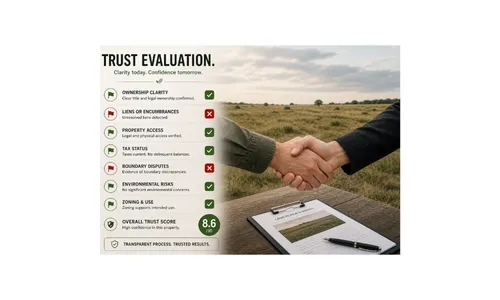
Spotting a Trustworthy Land Buyer: Red Flags and Green Flags for Sellers
“I’d been getting postcards and calls for years from people wanting to buy my little piece of land, so honestly, I didn’t trust any of them. When Friendly Land Buyers reached out, I almost threw the letter away. But they actually answered the phone, walked me through how everything would work, and never once made me feel rushed. From the written offer to closing with a title company, every step matched what they’d explained. When the sale finally closed and I saw the tax bill was gone for good, I realized I’d spent years worrying about the wrong thing. I wish I’d found them sooner.”
— Melissa Carter, Texas landowner
For many landowners, the hardest part isn’t deciding to sell land—it’s figuring out who to trust. If you’ve owned vacant land for any length of time, you’ve probably seen the flood of postcards, emails, and texts from people claiming they “buy land fast” or can “make a cash offer immediately.” Some of them may be legitimate, but others are vague, hard to verify, or simply not operating in a transparent way.
If you’ve never sold land without a realtor before, the process can feel unfamiliar. Unlike selling a house, there’s often no yard sign, no open house, and no clear sense of what a “normal” transaction looks like. That uncertainty is exactly what makes trust so important.
This guide breaks down what to look for when evaluating a land buyer, including the warning signs that should make you pause and the positive indicators that suggest you’re dealing with a professional who knows what they’re doing.
Why Choosing the Right Land Buyer Matters
Owning unwanted land can quietly become a long-term burden. Many people inherit property they’ve never seen in person, sometimes in another state, and suddenly find themselves responsible for annual property taxes, HOA fees, or basic upkeep decisions. Others purchased land years ago with plans that never materialized and now just want a clean exit.
The challenge is that land doesn’t “self-correct.” If you ignore it, taxes still arrive. If the property has issues like access problems, zoning limitations, or unpaid taxes, those issues don’t disappear on their own either.
The right buyer can simplify all of this. A good land buyer doesn’t just make an offer—they help guide the entire process, including coordination with title companies, resolving outstanding tax issues when possible, and ensuring the transfer is handled properly.
The wrong buyer, however, can turn a simple sale into a drawn-out, stressful experience. Confusing contracts, last-minute price changes, or lack of communication can leave sellers feeling stuck right where they started.
Green Flags: What Trustworthy Land Buyers Do Differently
One of the strongest signs of a trustworthy land buyer is clarity. From the first conversation, they should be able to explain how the process works in simple, straightforward terms. You should understand what information they need from you, how they evaluate your property, and what happens after you accept an offer.
There should be no mystery around the process. If you ask how long things typically take or what steps are involved, you should receive a consistent, confident explanation—not vague or shifting answers.
Another important sign is transparency in writing. A reputable buyer will always provide written documentation that reflects what was discussed verbally. This includes the purchase price, basic terms, and the expected closing process. If what’s in writing doesn’t match what you were told, that inconsistency is a problem.
Equally important is how they handle your questions. Selling land is often tied to emotional factors—especially when the property is inherited or has been in the family for years. A trustworthy buyer will not rush you or pressure you into making a decision immediately. Instead, they’ll give you space to review the offer, talk to family members, or even consult a professional if needed.
That patience is a strong indicator of a legitimate operation. Buyers who are focused on long-term reputation understand that trust matters more than speed.
Another green flag is how they handle complexity. Many properties are not perfectly simple transactions. Some have unpaid taxes, unclear access, or probate issues tied to inheritance. A capable land buyer won’t avoid these situations. Instead, they’ll explain how they typically work with title companies or attorneys to resolve them during closing.
Finally, look at how consistent their communication is. Reliable land buyers stay reachable, respond clearly, and maintain professionalism throughout the process. You should never feel like you’re chasing updates or wondering what’s happening next.
Red Flags: When You Should Slow Down or Walk Away
Just as there are signs of a good buyer, there are also clear warning signs that should make you cautious.
One of the biggest red flags is inconsistency in pricing or terms. If you receive one number over the phone and a different one in writing without a clear explanation, that’s a concern. Similarly, if the price keeps changing without new information about the property being provided, it may indicate that the offer is not stable or well-researched.
Pressure tactics are another major warning sign. A legitimate land buyer does not need to force a quick decision. If you’re being told things like you must sign immediately or risk losing everything, or if you’re discouraged from seeking outside advice, that’s a strong indicator to slow down.
Trustworthy buyers understand that land sales often involve thoughtful decision-making. They are comfortable giving you time.
You should also pay attention to the company’s visibility. While not every good buyer is a large, national brand, there should still be some level of traceability—such as a website, working phone number, and verifiable contact information. If the only communication is through anonymous messages or there’s no clear way to confirm who you’re dealing with, that lack of transparency is worth questioning.
Another red flag appears when a buyer tries to bypass standard closing procedures. Most professional land transactions involve a title company or real estate attorney. This ensures that the title is clear, funds are properly handled, and the transfer is legally recorded. If a buyer suggests skipping this step or handling everything informally, that should immediately raise concern.
Finally, be cautious of offers that feel unrealistic from the beginning. Some buyers may present unusually high numbers without a clear explanation, only to reduce the offer later after “discovering” issues. A reliable buyer will base their offer on real data, such as comparable sales, access, zoning, and tax status, and will be able to explain their reasoning.
What a Normal, Trustworthy Land Sale Looks Like
While every transaction is slightly different, a professional land sale tends to follow a predictable and transparent path.
It often begins with you providing basic details about the property. The buyer then reviews public records, evaluates the land’s characteristics, and considers market conditions. After that, they present a written, no-obligation cash offer.
If you accept, the transaction typically moves to a title company or real estate attorney. This neutral third party conducts a title search to identify any liens, unpaid taxes, or ownership issues. They also prepare the closing documents and coordinate the transfer of ownership.
During this stage, communication should remain steady. You should know what’s happening, what documents are needed, and what the timeline looks like.
At closing, the deed is officially transferred, any agreed-upon costs are handled, and you receive payment. For many sellers, this is the moment the stress finally lifts. The property is no longer something to manage, think about, or worry over.
What often surprises people is how simple the process feels when it’s handled correctly. Instead of months of uncertainty, it becomes a structured transaction with clear steps and predictable outcomes.
Why Trust Comes Down to Consistency
When evaluating a land buyer, consistency is often more important than any single promise. A trustworthy buyer says the same thing in writing, on the phone, and in the contract. Their process doesn’t change halfway through. Their communication stays steady. Their expectations remain clear from start to finish.
That consistency is what turns a potentially stressful situation into a manageable one.
Selling land doesn’t need to feel complicated, but it does require the right people on the other side of the table. When the buyer is transparent, responsive, and willing to explain the process clearly, everything else becomes significantly easier.
Need Help?
The inheritance process can be complex, especially when dealing with land in another state. We’re here to help in whatever way is most convenient for you:
Call us directly at 888-912-3242
Text us at 888-912-3242 for a quick response
Click the chat icon in the bottom right corner to start a conversation now
Our land specialists understand inherited land problems, back taxes, distant property ownership, and other real-world challenges, and can explain your options with no obligation or pressure. Take the first step toward peace of mind today.
Call us directly at 888-912-3242 for immediate assistance.
Text us at 888-912-3242 for a quick response.
Click the chat icon in the bottom right corner to start a conversation now.
Disclaimer: This guide provides general information and should not be considered legal or financial advice. Please consult with a qualified attorney and/or financial advisor for specific guidance on your situation.
