
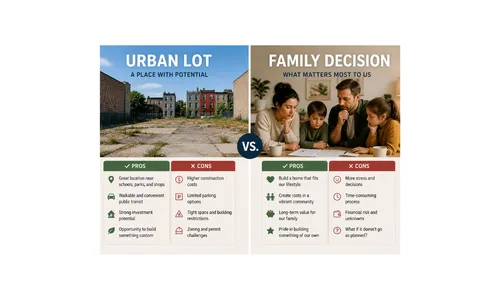
Holding vs. Selling That Tennessee City Lot: How to Decide What’s Best for Your Family
“When my dad passed, I ended up with a tiny city lot in Tennessee I’d never even seen. For two years I paid the taxes, argued with my brothers about what to do, and kept telling myself I’d ‘figure it out next month.’ I was honestly embarrassed that something so small could stress me out that much.
When I reached out to Friendly Land Buyers, they didn’t push me at all. They walked me through my options, answered every question, and gave me space to talk it over with my family. Once we agreed to sell, they handled the paperwork, the title company, and even the back taxes I’d fallen behind on.
The day we closed, it felt like a knot in my stomach finally loosened. Instead of an empty lot we argued about, we had cash in the bank and one less thing to worry about. Looking back, I wish I’d called them a year sooner.”
— Melissa J., inherited a vacant city lot in Tennessee
When a “Small” Tennessee Lot Becomes a Big Decision
If you’ve ended up with a vacant city lot in Tennessee, it probably didn’t come with instructions, expectations, or a clear plan. Maybe it was inherited from a parent or grandparent. Maybe it was purchased years ago with good intentions that never materialized. Or maybe it was supposed to become a future home, investment, or family project that life simply moved past.
What surprises many landowners is how something that looks simple on paper can slowly turn into a persistent source of stress. A vacant lot doesn’t demand attention the way a house does, but it still lives in the background of your finances and responsibilities. Property taxes arrive. City notices can appear. Family opinions start to surface, especially when multiple heirs are involved.
Over time, the question shifts from “What are we going to do with this?” to something heavier: “Why are we still holding onto this at all?”
And that’s usually where the real decision begins—not about dirt or acreage, but about peace of mind, family alignment, and how much mental space you want to dedicate to something you rarely think about, but never fully forget.
The Real Cost of Holding a Tennessee City Lot
At first glance, keeping a vacant lot seems harmless. There are no tenants, no repairs, and no urgent maintenance calls. It’s easy to assume it can simply sit quietly until a decision is made later.
But holding land still carries ongoing costs that build slowly over time.
Property taxes are the most obvious. Even a small city lot generates annual obligations, and those payments don’t pause just because the land isn’t being used. For many owners, especially those living out of state, those bills become an annual reminder of a decision that hasn’t been made.
Then there’s the less visible cost—mental energy. You might find yourself thinking about the property more than you expected. Did the taxes get paid? Did the mail go to the right address? Is anything changing with zoning or city requirements? Should we call someone about it?
For inherited properties, the emotional layer can be even heavier. One sibling wants to keep it “just in case.” Another wants to sell immediately. A third may not want to think about it at all. Meanwhile, the lot itself remains unchanged, quietly collecting time, taxes, and tension.
In many cases, the financial cost is manageable, but the emotional cost is what really adds up.
When Holding Might Still Make Sense
Despite the challenges, there are times when keeping a Tennessee city lot is the right decision. The key difference is whether there’s a clear, shared purpose behind holding it.
Some families genuinely have a plan. A child or grandchild may intend to build in the near future. The lot might be part of a larger land strategy, or it could serve a practical purpose such as expansion or long-term investment.
In those cases, holding the property feels intentional. The taxes are not just an expense—they are part of a strategy everyone understands and agrees on.
Holding can also make sense when the land carries strong sentimental value and the entire family is aligned on preserving it. Maybe it represents a childhood home area, a family legacy, or a meaningful connection to a place that matters deeply to everyone involved.
The key difference is clarity. When holding is intentional, it feels manageable. When it’s accidental or delayed, it often becomes a source of stress.
The Hidden Problem With “We’ll Decide Later”
A lot of Tennessee landowners don’t consciously choose to hold their property. Instead, they drift into it.
One year passes. Then another. Taxes get paid because it feels easier than dealing with the decision. Family conversations get postponed because nobody wants conflict. The property stays in limbo.
This is where small issues can slowly grow.
Back taxes can accumulate if something gets missed. Title complications can surface over time. Family disagreements tend to intensify the longer nothing is resolved. What started as a simple inherited lot can quietly turn into a long-term point of frustration.
And perhaps the biggest issue is this: “waiting” often feels like avoiding a decision, but it is actually a decision in itself—one that keeps you tied to something that may no longer fit your life.
When Selling Starts to Make More Sense
Selling a vacant city lot in Tennessee is not about giving up. For many families, it’s about finally aligning their responsibilities with their actual lives.
Selling often makes sense when the property no longer fits into anyone’s plans. If no one intends to build, develop, or use the land, then holding it becomes more about obligation than purpose.
It also becomes more appealing when distance is a factor. Managing land from another state can be inconvenient at best and stressful at worst. Even simple tasks like checking taxes or responding to city notices can feel unnecessarily complicated.
For inherited properties, selling can also resolve family tension. Instead of ongoing disagreements about what “should” happen, selling allows everyone to move forward with a shared outcome.
There is also the financial perspective. The money tied up in taxes and long-term holding costs can often be redirected into something more meaningful—supporting family needs, paying down debt, or simply reducing financial pressure.
In many cases, selling doesn’t close a door. It closes a loop that has been left open too long.
Common Concerns About Selling
Even when selling makes logical sense, hesitation is normal.
Some people worry they will regret the decision later. Others fear family conflict, especially if inheritance is involved. It’s also common to assume the process will be complicated, slow, or require fixing issues like back taxes before anything can happen.
These concerns often keep people stuck longer than necessary.
The reality is that many vacant land sales do not require perfect conditions. Properties with back taxes, unclear usage plans, or out-of-state owners can still be sold as-is in many cases. The process is often more straightforward than people expect once they understand their options.
What usually helps most is clarity. Once you understand what the property is worth in its current condition and what the actual process looks like, the fear tends to shrink.
Making the Decision as a Family
When multiple family members are involved, the decision can feel heavier than it needs to be. Everyone brings different priorities, memories, and assumptions into the conversation.
One helpful approach is simply focusing on reality instead of possibility. What is the property costing us right now? Is anyone actively planning to use it? If we sold it, what would change for us immediately?
These questions don’t erase emotion, but they help ground the discussion in something tangible.
In many families, once the conversation shifts from “what should we do someday” to “what does this mean today,” the decision becomes clearer.
Sometimes the outcome is to hold with intention. Other times, it becomes obvious that selling is the more practical path forward. Either way, the goal is the same—reduce uncertainty and move toward alignment.
Moving Toward Peace of Mind
A Tennessee city lot may be small in size, but the decision around it can feel surprisingly large. It often sits at the intersection of family history, financial responsibility, and future planning.
Whether you choose to hold it or sell it, what matters most is that the decision is made consciously rather than indefinitely postponed.
There is a real difference between owning land and feeling weighed down by it. And for many families, clarity itself is the turning point.
If the property is no longer serving a clear purpose, it may be worth exploring what your options actually look like today—not as a commitment, but as information that helps you make a confident decision.
Need Help?
If you’re trying to figure out what to do with a vacant city lot in Tennessee, you don’t have to sort it out alone or make a rushed decision.
A simple conversation can often help you understand your options—whether that’s holding the property with a clearer plan or selling it in a way that removes stress, taxes, and uncertainty from your family’s plate.
If you’d like to explore what your Tennessee land might look like as a cash sale, or just want to ask questions about your specific situation, you can reach out anytime:
Call us directly at 888-912-3242 for immediate assistance.
Text us at 888-912-3242 for a quick response.
Click the chat icon in the bottom right corner to start a conversation now.
If you prefer online communication, visit FriendlyLandBuyers.com or use the chat feature on our website to connect with someone who understands the process.
There’s no pressure and no obligation—just straightforward information so you can make the decision that actually fits your family’s needs right now.
Disclaimer:This guide provides general information and should not be considered legal or financial advice. Please consult with a qualified attorney and/or financial advisor for specific guidance on your situation.
